Choosing data cabling for a home network can feel more confusing than it should be. There’s a lot of advice online and technical jargon and talk about ‘future-proofing’. Cat6 and Cat7 are the two categories people ask about most, but they’re often misunderstood and are rarely compared in a way that relates to real homes.
This article explains how each cable performs in practice, including how fast they really are and what matters in a typical home. We also look at installation and long-term compatibility to help you decide which option actually suits your property.
How Cat6 and Cat7 actually differ in real homes
Cat6 and Cat7 are both high-performance copper data cables, but they’re designed for very different environments. Cat6 suits everyday networking in houses, apartments, flats and even small offices, where equipment is standard and electrical noise is low. Cat7 on the other hand, is built for specialist or industrial settings with harsh interference, where fully shielded systems are essential.
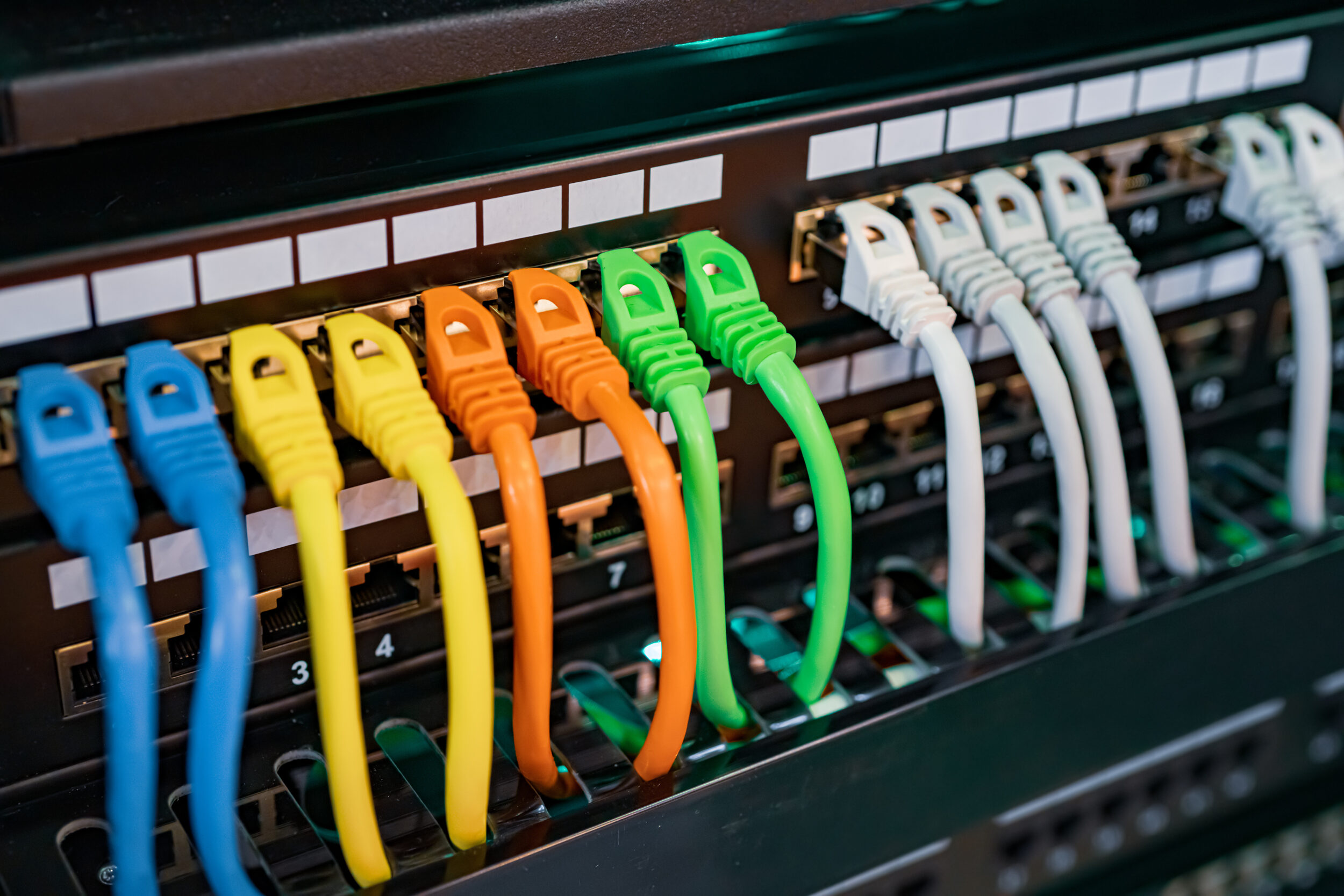
One of the biggest differences is compatibility. Cat6 uses the standard RJ45 connector found on almost every home router and device. Cat7 does not. To meet its full specification, it relies on GG45 or TERA connectors, which are rarely used in consumer equipment. Without these connectors, Cat7 loses most of its technical advantages and ends up performing much like Cat6.
Cat7 also has heavier shielding around each pair of wires. This helps in noisy industrial spaces but makes the cable stiffer and harder to install. In typical homes with shorter runs and minimal interference, this extra shielding offers little practical benefit and usually adds more complexity than value.
Cat6 vs Cat7 – Technical comparison
| Feature | Cat6 | Cat7 |
|---|---|---|
| Certified standard | Class E | Class F |
| Maximum speed | 10G | 10G |
| Distance for 10G | 55 – 100 m | 100 m |
| Connector type | RJ45 | GG45 or TERA |
| Shielding | Optional | Always shielded |
| Installation difficulty | Low | High |
| Domestic benefit | High | Low |
The table shows the contrast clearly. On paper, Cat7 looks more advanced. In practice however, it does not improve performance in the place where most people want it – the home.
Why Cat6 meets the speed requirements of modern households
Cat6 provides far more bandwidth than most homes ever come close to using, capable of supporting:
- 1G up to 100 metres
- 2.5G up to 100 metres
- 10G up to 55 metres in typical conditions, or up to 100 metres in cleaner environments
Very few households reach anywhere near these limits. Ultra-HD streaming uses only tens of megabits. Video calls need even less. Large downloads are still capped by broadband speed, not by the cabling inside the home.
The same applies to smart home systems. Platforms like Control4 send small, occasional control signals. CCTV streams are compressed. Door entry, lighting and heating systems pass tiny packets rather than continuous data. None of these come close to stressing Cat6.
This is why Cat6 remains the standard choice for home networks. It has more than enough capacity for current devices and plenty of headroom for whatever comes next.
Why homeowners often request Cat7 – and why it’s usually unnecessary
Many people assume that a higher category number means better performance. It’s an easy conclusion to draw, especially when cabling is marketed in tiers and Cat7 appears in online charts as the ‘top optio’. This creates the impression that Cat7 is the premium or future-proof choice for any home.
In reality, Cat7 is designed for environments with extreme electromagnetic interference, such as data centres, manufacturing plants, satellite arrays and telecom infrastructure. Typical homes do not face these conditions, so the extra shielding and stricter standards provide little real benefit.
Cat7’s advantages also rely on using Cat7-rated hardware throughout the system, including connectors, patch panels and switches. Most consumer equipment doesn’t support these components. Without them, Cat7 performs much like Cat6 despite the higher specification on paper.
Many homeowners ask for Cat7 to future-proof their property, but true future-proofing is about compatibility and easier upgrades. Cat6 delivers all of these without the added complexity or cost.
Is Cat6 suitable for gaming and streaming?
Cat6 handles all common performance-sensitive uses with ease such as 4K streaming, online gaming, video calls and more. Gamers need low latency and stable packet delivery rather than extreme throughput. Cat6 provides both and easily exceeds the bandwidth of typical broadband connections.
The same applies to streaming and media distribution. Even 8K streams do not come close to pushing Cat6 limits. Multi-room audio, IPTV and VR also sit well within Cat6 capacity.
Cat7 does not improve these experiences because the devices involved still operate within Cat6 capabilities.
Where does Cat6e fit into the comparison?
Cat6e sounds like the next step up from Cat6, but it isn’t an official standard. Manufacturers use the term for enhanced Cat6 cables, often with better shielding or construction, but the performance limits remain the same.
Cat6e still operates within Cat6 specifications. It doesn’t match Cat7 standards and doesn’t use Cat7-style connectors. For anyone comparing Cat6 and Cat7, Cat6e is best viewed simply as another variation of Cat6 rather than a separate category.
Installation and costs
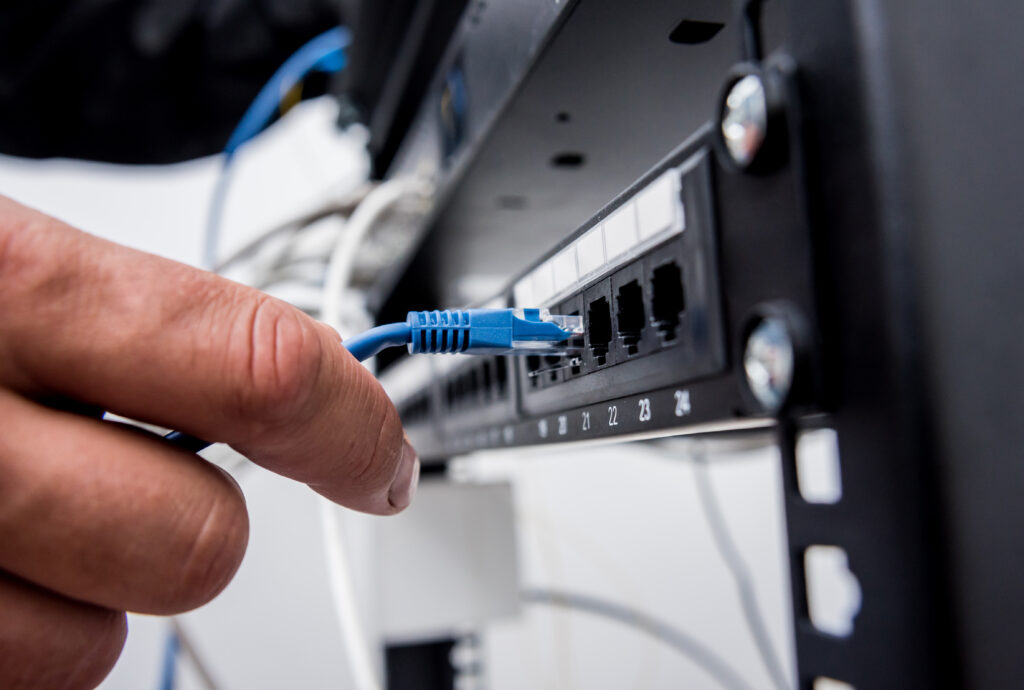
Real-world performance depends not only on the cable itself but also on how easily it can be installed. Cat6 is flexible and simple to route, which helps maintain signal quality and reduces the chance of damage during home networking installations. It bends neatly through walls, floors and containment, making it well suited to most home layouts.
Cat7 is very different. Its heavier shielding makes the cable bulkier and harder to manoeuvre, which increases labour time and the risk of installation errors. This extra stiffness can also make future upgrades more difficult, as adding or adjusting routes becomes more restrictive.
Cost is another clear factor. Cat7 is more expensive to buy and install, yet offers no measurable performance improvement for home devices that rely on standard RJ45 connections.
For most households, Cat6 provides the best balance of performance, price and practicality.
Should homeowners ever choose Cat6a or Cat7 instead?
Cat6a is a sensible option if you need guaranteed 10G across all cable runs, including longer ones. It’s thicker than Cat6 but still uses the familiar RJ45 connector, so it remains compatible with typical home networking equipment.
Cat7 remains a niche choice. It only makes sense in a home if there is unusual electrical interference or a need for fully shielded, non-RJ45 connections. These situations are rare in residential properties.
A simple rule helps most people decide – If your devices use RJ45, Cat6 is the right choice for your home network.
Cat6 vs Cat7 Summary
Cat6 delivers the bandwidth, stability and flexibility needed for modern homes. It supports up to 10G in real-world conditions and works seamlessly with mainstream home networking equipment. Cat7 adds extra shielding and complexity but brings no meaningful speed gains. In most homes, it increases cost without improving performance.
For anyone planning a new installation or upgrade, Cat6 remains the most practical and future-ready choice.
If you want a network design that suits your property and is installed to a high standard, get in touch with our team at AAV Smart Homes. Our home networking installation service covers everything from cable specification to full system integration, ensuring your setup is built for today’s demands and tomorrow’s upgrades.