
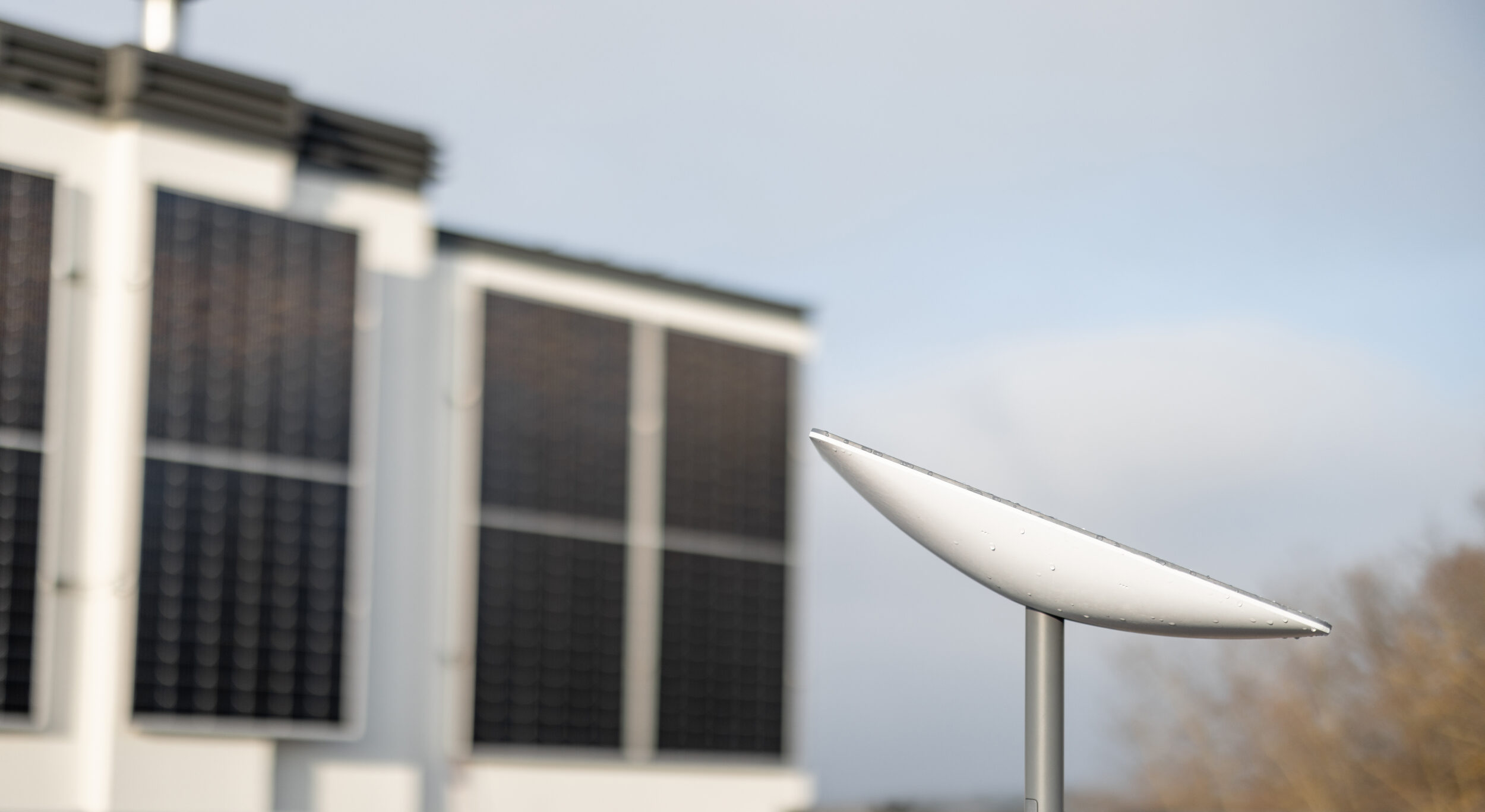
The correct placement of your Starlink satellite is essential to maximising speed and ensuring a stable connection. Your options are plenty, but the best option for any Starlink dish location is anywhere with an unobstructed view of the sky and a solid mounting surface.
In this article, we will explore some of the best options for where you can have your Starlink satellite installed, as well as why the positioning matters so much and what you can do to ensure you get the best performance out of your connectivity.
TL;DR
The best place to install a Starlink dish is anywhere with a completely unobstructed view of the sky, ideally on a roof ridge, chimney or high gable end. These positions give the clearest exposure to passing satellites and reduce dropouts caused by trees, buildings or nearby rooflines. Wall or ground mounts work only if the view is equally clear and cable routing is practical. Clearance, not height alone, determines performance.
Why Starlink Dish Positioning Matters for Performance
Starlink uses phased-array antennas that track fast-moving satellites in low Earth orbit. These antennas require a 100°+ view of the sky in order to maintain stable connectivity.
Signal quality will suffer and connectivity will drop out when the dish is obstructed by things like:
- Chimneys and rooflines
- Trees and overhanging branches
- Nearby buildings or outbuildings
- Hills or rising ground
Starlink performance depends on continuous visibility of satellites. Even brief obstruction can cause measurable packet loss and service interruptions.
What Performance Issues Will Poor Starlink Placement Cause?
- Reduced download speeds below typical 100 – 250mb/s ranges
- Higher latency above the expected 25 – 50ms
- Frequent dropouts, especially during peak hours
- Slow uplink speeds during video calls or cloud backups
The good news is that during installation you can reduce the guesswork by using the ‘system’s obstruction tool’ in the Starlink app. This will help identify and analyse blockage zones.
What is the Minimum Sky Visibility Required for Starlink?
Starlink recommends a 100° field of view around the dish, with total clearance to the north in the UK and Europe.
This direction aligns with the satellite sweep path and ensures your connectivity is stable. Other key positional data to be aware of includes:
- Clearance of 25° above the horizon reduces the risk of outages
- A 360° horizontal view improves performance but is not essential
- Obstructions within 30 metres can block satellite acquisition
In short, a Starlink satellite dish must see the sky without interruption, otherwise you risk your connectivity becoming erratic and unstable, which is the last thing you want when you’re streaming movies and TV shows, gaming online, conferencing during remote working or whatever else.
Where Should Your Starlink Dish Be Installed?
Roofs offer the clearest sky view and as such, are the preferred location for Starlink dish installation in most homes.
Some of the best roof mounting positions include:
Roof Ridge
A roof ridge offers the most consistent performance. It provides symmetrical clearance on each side and reduces the risk of nearby obstructions cutting across the signal path.
Chimney Mounts
A chimney can provide a valuable height advantage, but only if the structure is sound. Brickwork, mortar and flue heat must be considered. Many installers use lashing kits to avoid drilling into older stacks.
Gable Ends and Side Elevations
A gable end works well when the roofline blocks part of the sky. Brackets or short poles can lift the dish above gutters and keep it clear of overhangs. This is often the preferred alternative when a ridge installation is not possible.
Flat Roofs
A flat roof is suitable when a ballast frame or non-penetrating mount is used. Protecting roofing membranes is essential. Exposure to wind must be assessed carefully on open flat roofs.
Facts to Assess Before Choosing a Roof Position
- Wind exposure – Dishes must withstand UK gusts. Ensure mount rigidity.
- Cable routing – Plan a direct route into the loft or comms cupboard.
- Safety – Some roofs are unsafe without professional access.
- Material compatibility – Tile, slate and metal roofs require different fixings.
A professional installer, like our team at AAV, can perform load checks and ensure compliance with BS EN 1991 wind-loading standards.
Using a Wall Mount When Roof Access is Limited
Many homes can’t support a roof installation for whatever reason, from roof tiles being fragile to roof access being restricted to planning considerations. In these cases, a wall mount is a practical option.
It allows shorter cable runs which reduces signal loss and simplifies routing into the property, while still giving the dish a clear view of the sky when positioned correctly. It also makes future maintenance simpler by simplifying service accessibility.
The position of the wall also matters. A wall with a clear view to the north offers the best chance of stability.
If clearance is limited, the dish can be raised on an extended pole, but wind loading and fixings must be assessed in line with recognised hardware standards.
When is Ground-Level Starlink Satellite Installation Suitable?
Ground-level installations can work well on open plots. A dish placed on a dedicated pole in a clear section of the garden can achieve excellent performance if the surrounding area is free from trees and buildings.
Ground installations need physical protection because dishes sit within reach of pets, tools and machinery. Cables should be run in conduit to protect them from UV exposure and accidental damage.
This option suits properties with large open gardens or rural locations where foliage is minimal.
Cable Length and Routing Considerations
Starlink provides a standard 30-metre cable. This is sufficient for most homes but requires planning when routing from the dish to the living space. Longer routes can use approved extensions or Ethernet adapters, although voltage drop must be considered.
The simplest route is usually through a loft space and down into a comms cupboard or living area. All external penetrations should be sealed to maintain weather resistance.
Using the Starlink App to Verify Your Chosen Location
The Starlink app included an obstruction scanning tool. It provides a visual map of any blockage zones around the proposed mounting point.
The scan measures the path of satellites and highlights areas where interference is likely. This is one of the most reliable ways to confirm whether a location will perform well before any drilling or mounting work begins.
Key Factors to Review Before Installation
Consider these core requirements when choosing the installation point:
- The dish must have a clear view of the northern sky
- The mounting point must be structurally sound
- Cable routing should be short, direct and protected
- The location should avoid trees, chimneys and nearby roofs
If these criteria are met, the dish will deliver stable performance with minimal outages.
Conclusion
The ideal location for a Starlink dish is any position that offers a wide, unobstructed view of the sky and a secure mounting surface. Roof ridges and chimney mounts deliver the best results due to their height and clear exposure. Wall mounts and ground-level poles work well when selected with care. The main requirement is obstruction-free visibility, supported by strong fixings and planned cable routes.