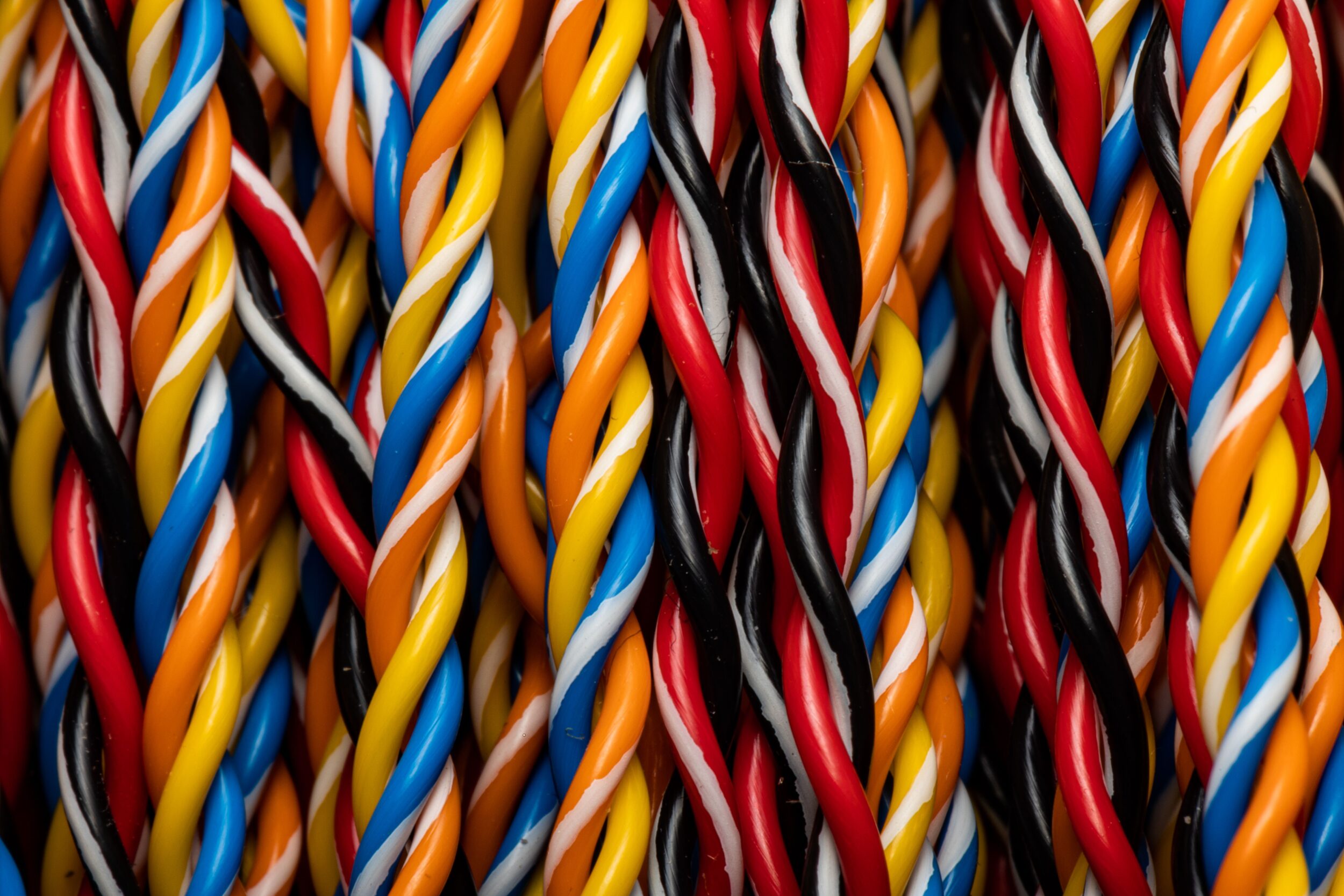
Ethernet cabling is designed to carry large amounts of data reliable, but performance can drop when signals interfere with each other. One of the most common causes of this interference is crosstalk. It often goes unnoticed, yet it can quietly reduce speeds and stability across a home network.
This article explains what crosstalk is, why it happens and how it can affect real-world performance. We also look at practical ways it can reduced through proper cable choice and professional design and installation.
What crosstalk actually means?
Crosstalk occurs when a signal travelling through one pair of wires interferes with a signal in another pair. Ethernet cables contain multiple twisted wire pairs packed closely together. When electrical signals move through them, a small amount of energy can leak between pairs.
This interference distorts the signal. As speed increase, the margin for error gets smaller, which makes crosstalk more noticeable on higher-bandwidth link like gigabit and above.
In simple terms, crosstalk is unwanted noise created by neighbouring wires inside the same cable or nearby cables.
Why crosstalk matters in home networks
Low levels of crosstalk usually go unnoticed. Higher levels can reduce throughput, increase error correction and cause speed negotiation to drop. In some cases, a gigabit link may fall back to 100MB/s to maintain stability.
Common symptoms linked to crosstalk include:
- Inconsistent speeds between rooms
- Gigabit links that won’t hold
- Unstable performance under load
- Good test results close to the router but poorer results elsewhere
Crosstalk does not always break a connection, but it will often degrade performance quietly which makes it harder to diagnose.
Types of crosstalk you might encounter
Near-end crosstalk (NEXT)
NEXT occurs when interference is detected at the same end of the cable where the signal is transmitter. This is the most common type and has the greatest impact on performance.
Far-end crosstalk (FEXT)
FEXT occurs when interference is measured at the opposite end of the cable. It becomes more relevant on longer runs and higher frequencies.
Alien crosstalk
Alien crosstalk comes from nearby cables rather than within the same cable. This usually happens when many data cables are tightly bundled together over long distances.
In most homes, NEXT is the most common issue, but alien crosstalk can appear in larger properties or rack-style installation.
What causes excessive crosstalk in homes?
Several installation factors increase the risk of crosstalk:
- Poor cable quality
- Loose or incorrect terminations
- Excessive untwisting of wire pairs
- Long parallel cable runs
- Tight bundling of multiple data cables
- Running data cables too close to power lines
These issues are often introduced during installation rather than being faults with the cable itself, which is why its important to work with a trusted data networking installation contractor.
How cable design reduces crosstalk
Ethernet cables are engineered to minimise interference. The twisting of each wire pair is deliberate and varies between pairs to reduce signal overlap.
Higher-quality cables improve this further by:
- Tighter and more consistent twists
- Internal separators between pairs
- Better insulation materials
- Optional shielding around pairs or the whole cable
This is why Cat6 performs better than older categories and why Cat6a handles higher frequencies more reliably.
Why terminations play a critical role
Crosstalk often increases at the termination point rather than along the cable run. Untwisting pairs too far back exposes them to interference and undermines the cable’s design.
Good practice keeps pair untwist to an absolute minimum, usually no more than a few millimetres. Poor punch-downs or rushed terminations are a common cause of gigabit performance issues.
This is also why professional testing focuses heavily on termination quality.
How to reduce crosstalk in a home installation
Reducing crosstalk starts with good planning and careful structured data installation.
Key steps include:
- Using the correct cable category throughout
- Keeping pair twists intact right up to the termination
- Avoiding tight bends and kinks
- Separating data cables from mains power
- Avoiding large, tightly packed cable bundles
- Using quality keystone modules and patch panels
In higher-demand setups, Cat6a or shielded Cat6 can further reduce interference when installed correctly.
Why crosstalk becomes more important at higher speeds
As Ethernet speeds increase, signals use higher frequencies. These are more sensitive to interference and leave less room for error. A cable that works fine at 100MB/s may struggle at 1GB/s or 2.5GB/s if crosstalk is present.
This is often why older installations often fail to support modern speeds even though the cable appears intact.
Conclusion
Crosstalk is signal interference between wire pairs that can quietly reduce ethernet performance. It becomes more noticeable at higher speeds and is often caused by poor installation rather than faulty equipment. With the right cables, careful terminations and proper routing, crosstalk can be kept well within safe limits.
If you want a home network that delivers consistent speeds across every room, our team at AAV Smart Homes can help. We design and install structured cabling systems that minimise interference and are tested for real-world performance.