
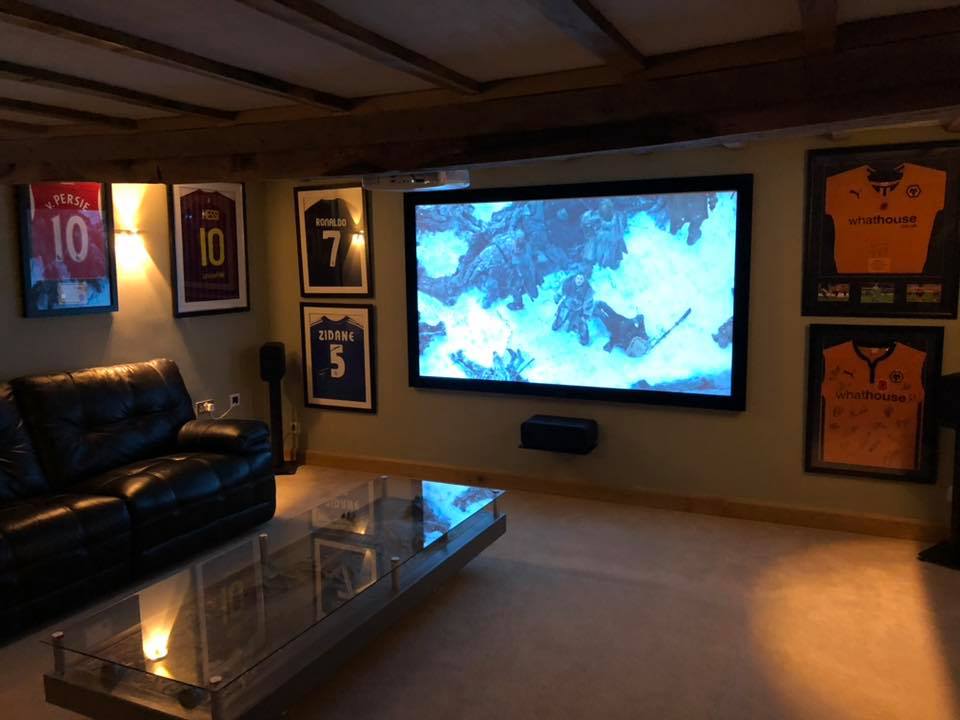
The audio-visual (AV) industry, once defined by the size of the screen and the volume of the speakers, is undergoing a profound transformation. The new benchmark for excellence is no longer just performance, but integration. As the smart home moves from a high-tech novelty to a consumer expectation, the AV and home automation sectors are merging into a single, seamless experience, with artificial intelligence and universal standards leading the charge.
Recent industry showcases, including the pivotal CEDIA Expo 2025, have highlighted a clear trend: the industry is focused on “evolution, not disruption.” The goal is to make sophisticated technology disappear into the background, creating truly intuitive living spaces.
“Consumers no longer want a pile of remotes and a dozen different apps,” explains a technology analyst from CEDIA (Custom Electronic Design and Installation Association). “They want a single, cohesive ecosystem. Tapping a ‘Movie Night’ scene on a keypad that dims the lights, lowers the shades, and starts the projector isn’t a futuristic dream; it’s the new baseline.”
The AI Conductor
The most significant driver of this integration is Artificial Intelligence (AI). Once relegated to simple voice commands, AI is now the “brain” of the smart home, personalizing the AV experience.
Proactive Experiences
AI-driven platforms like Josh.ai are moving beyond simple commands. They learn a homeowner’s habits to proactively suggest or automate “scenes.” For example, the system might learn that on Friday evenings, you prefer dimmed, warm lighting and a specific “chill” playlist in the living room, and have it ready automatically.
Enhanced AV
At the consumer level, new products like the 2025 Amazon Echo Studio integrate spatial audio for immersive, room-filling sound, while Google’s latest Nest Hub displays leverage Gemini AI to become more conversational and helpful home control centres.
Smarter Hardware
Even the displays themselves are getting smarter. Samsung’s new Micro RGB displays, for example, use an “AI engine” to optimize picture and sound in real-time.
From Walled Gardens to a Unified Language
For years, the industry’s biggest hurdle has been interoperability. A smart lock used one protocol (like Z-Wave), the smart lights used another (like Zigbee), and the AV system was a proprietary, closed loop. This “walled garden” approach created complexity and frustration for consumers.
The solution has arrived in the form of the Matter protocol. Backed by Apple, Google, Amazon, and other industry giants, Matter is a universal standard that allows devices to communicate with each other seamlessly, regardless of the manufacturer.
This has unlocked a new level of integration for AV companies. Now, a high-end automation platform like Control4 or Savant can reliably and easily communicate with a Yale smart lock, a Nest thermostat, and a Sony television, all at the same time.
Market Demands and Professional Integration
This shift is being reflected in the latest products from professional automation leaders:
Control4 (Snap One)
Recently unveiled its X4 platform, which now features deep integration with Apple’s ecosystem, including native Apple Music and Airplay 2 support. A new partnership with Ring allows security camera snapshots to appear directly within the Control4 app, merging security and AV.
Crestron
Demonstrated a new engine that allows its Crestron Home automation interface to be displayed on any third-party screen—even a smart mirror. This effectively turns any visual surface in the home into a control panel.
The financial data confirms this trend. The global smart home market is projected to swell from approximately $147.5 billion in 2025 to over $633 billion by 2032, according to a report from Fortune Business Insights. Much of this growth is fueled by entertainment and AV systems, which are often the “gateway” for consumers to adopt wider home automation.
While the DIY market grows, the complexity of fully integrating high-fidelity AV, lighting, security, and climate control has reinforced the value of professional installers.
“The future isn’t about the technology itself, but the experience it creates,” the CEDIA analyst adds. “The ultimate luxury is technology that works so well, you don’t even notice it’s there. That’s the new frontier for AV.”